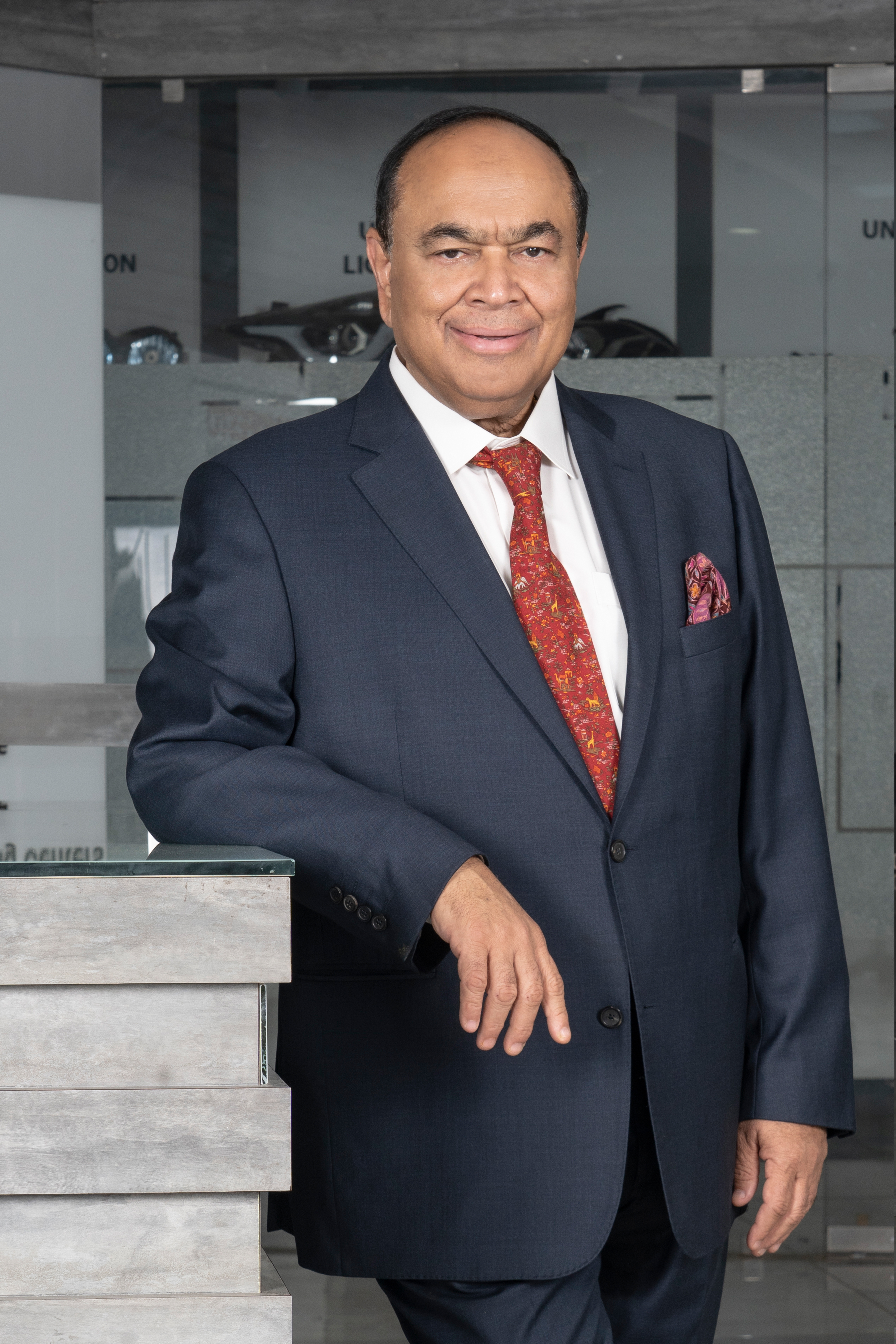
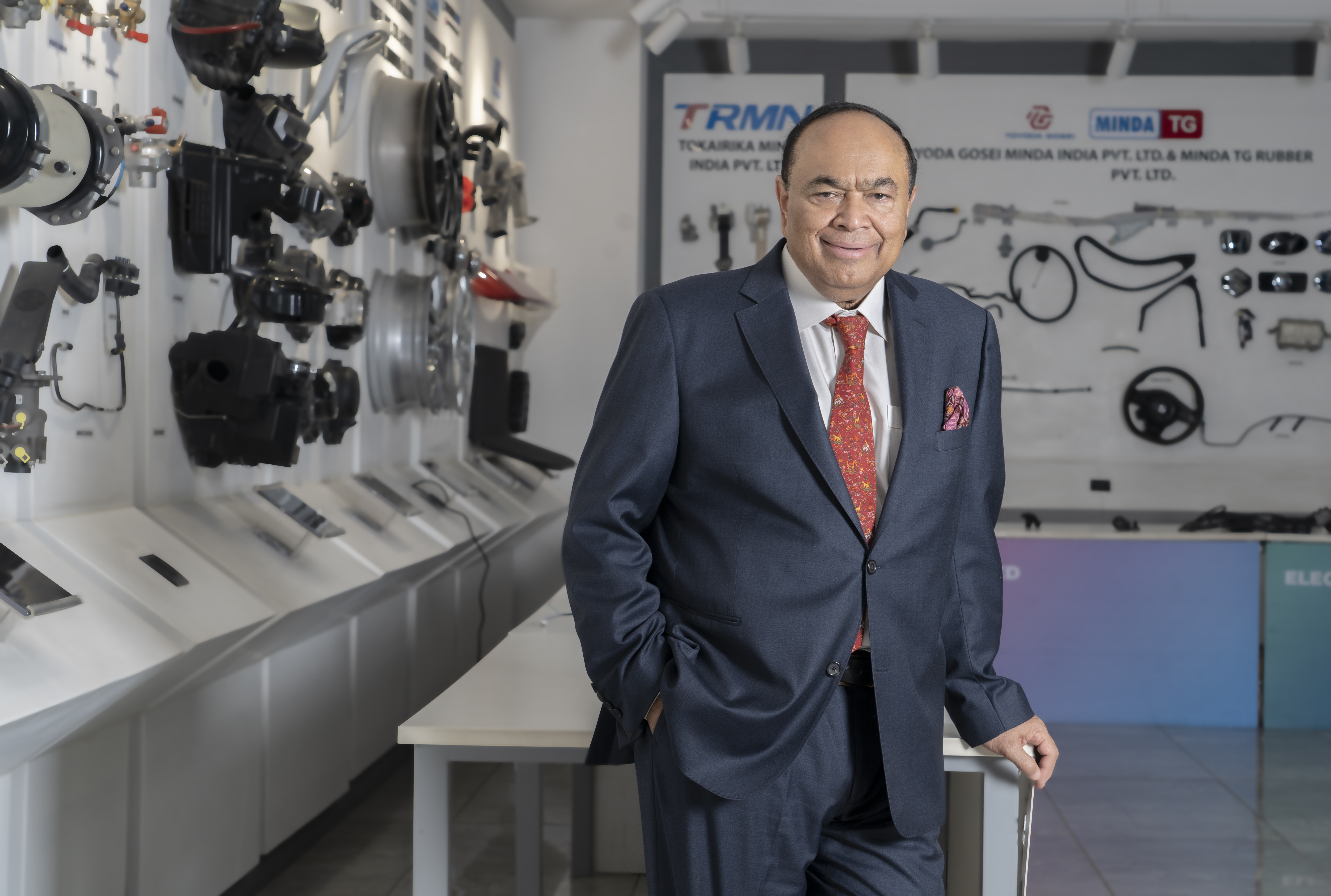
India today feels different. There is movement everywhere. Highways stretching deeper into the hinterland, factories expanding capacity, ports handling higher volumes and supply chains realigning with fresh urgency. For many in industry, this moment feels long overdue. For Nirmal Minda, it feels like an opportunity India cannot afford to slow down.
With nearly five decades spent inside manufacturing, across shopfloors, joint ventures and global markets, Minda has seen India at its cautious best and its constrained worst. Today, as Chairman of Uno Minda Limited and President of ASSOCHAM, he believes the country is closer than ever to becoming a true global manufacturing powerhouse.
But policy intent alone, he says, will not be enough. What will decide the outcome is trust. Trust between government and industry. Trust in Indian manufacturers to invest responsibly. And trust in India's ability to compete globally if given speed and stability.
A government that is clearly backing manufacturing
Minda is generous in his assessment of the current policy environment. The government, he says, is visibly positive and aligned with manufacturing growth. Budget after budget has reinforced this intent, whether through infrastructure investment, sector specific incentives or production linked schemes. The message from the top is clear. Manufacturing matters.
India already derives a significant share of its economic strength from manufacturing-linked activity, yet its direct contribution to GDP remains lower than its potential. Bridging this gap, Minda believes, is no longer a question of vision. It is now about execution.
"The direction is right," he says. "Now we need speed."
That speed, however, is often slowed by friction on the ground. Long approval cycles, layered compliance structures and procedural uncertainty still weigh heavily, especially on smaller manufacturers. This is where Minda repeatedly returns to the idea of trust.
Why trust is the real growth multiplier
For manufacturers, time is capital. Delays in land acquisition, building approvals and occupation certificates can stretch into years. For MSMEs, nearly half of their initial investment often goes into land and buildings, leaving far less for technology, automation or working capital.
Minda does not argue for deregulation. He argues for rationalisation. A system that trusts manufacturers, simplifies approvals and focuses on outcomes rather than processes would immediately unlock energy across the sector.
Trust, he insists, works both ways. Industry must be transparent and accountable. Government must be responsive and predictable. When this balance is achieved, growth accelerates naturally.
From nuts and bolts to code and chips
Walk into a modern auto factory today and it feels nothing like the plants of even a decade ago. What once revolved around steel, shafts and gears is now equally about software, sensors and screens. For Minda, this shift is deeply personal. He has lived through it.
"The car is no longer just a mechanical product," he explains. Electrification, connectivity and intelligence are redefining manufacturing. Every new vehicle carries more electronics than ever before, and the value per component is rising sharply.
The opportunity is immense. So is the pressure.
India has no shortage of software talent, but Minda points to a critical gap. Engineers who understand how electronics, software and automotive systems integrate seamlessly are still in short supply. After decades dominated by mechanical and electromechanical engineering, the industry is now racing to reskill.
This is where he sees the next leap coming from. Industry-led training, faster skilling programs and tighter alignment between education and factory realities. Government initiatives on skill development, he says, are a strong foundation. What will make the difference is how quickly industry builds on them.
Despite the disruption, Minda remains confident. "We have transitioned before," he says. "From mechanical to electromechanical, from manual to automated. This is the next chapter. India can adapt."
Localisation as a strategic necessity
Beyond skills, localisation has emerged as a defining challenge. India remains dependent on imports for semiconductors, rare earth materials, battery cells and key EV components. In an increasingly uncertain global environment, this dependence carries risk.
Minda believes localisation is not about isolation. It is about resilience. Accelerating domestic R and D, shortening validation cycles and building indigenous capability are now strategic imperatives.
He points to innovations like magnet-free motors as examples of how Indian companies are already working to reduce reliance on scarce imported materials. Government initiatives to promote domestic mining and critical materials, he says, are steps in the right direction. What is needed is sustained follow-through.
Learning fast without losing confidence
On electric vehicles, Minda is pragmatic rather than ideological. China's scale, cost competitiveness and speed are undeniable. Producing tens of millions of vehicles annually, with a large share already electric, it has built a formidable manufacturing ecosystem.
India, he believes, should not hesitate to learn. Strategic collaboration, technology partnerships and controlled engagement can help accelerate capability building and localisation over the next few years. Many successful manufacturing nations followed similar paths during their growth phase.
The key, Minda stresses, is intent. Collaboration should lead to knowledge transfer, domestic capacity and long-term self-reliance. Not permanent dependence.
PLI schemes and the need for simplicity
Production linked incentive schemes have delivered results, particularly in pharmaceuticals and electronics. Automotive manufacturing has benefited as well, though not to the extent industry had hoped.
The reason, Minda says, is not policy design but complexity. Multiple approval layers and rigid processes dilute impact. A simpler, trust-driven approach would allow manufacturers to focus on delivery rather than documentation.
Reducing imports, improving sector-wise trade balances and strengthening domestic value chains would directly support GDP growth and economic resilience. The ambition is clear. Execution must now catch up.
MSMEs need space to breathe
If large manufacturers face friction, MSMEs face overload. Compliance alone can involve interactions with more than two dozen departments. This pulls entrepreneurs away from productivity, quality and innovation.
Minda imagines a different model. Plug-and-play industrial ecosystems with flatted factories, rented or owned sheds and shared services for labour, logistics and compliance. In such an environment, MSMEs could focus on cost competitiveness and quality rather than paperwork.
Financing is equally critical. MSMEs, he argues, should access capital at more favourable rates than larger firms. Encouragingly, global investors are increasingly interested in Indian MSMEs, drawn by the country's growth trajectory in a world where many markets have matured.
The three pillars of competitiveness
For Minda, manufacturing excellence rests on three pillars.
The first is design and innovation. Understanding customer use cases, especially in a market as unique as India, is essential. Technologies developed elsewhere cannot be applied blindly without adaptation.
The second pillar is manufacturing engineering. Automation, AI-led decision making and productivity optimisation allow companies to achieve more with less capital. AI, in particular, improves speed, agility and cost competitiveness across the value chain.
The third pillar is execution. Consistent quality, sustainability and reliability are non-negotiable in global markets. India has progressed, but the journey towards world-class manufacturing standards must continue with discipline.
Sustainability begins in the mind
On sustainability, Minda is candid. The biggest hurdle is not technology or incentives but mindset. Many companies still view sustainability purely through payback calculations.
Government incentives for renewable energy and efficiency help, but long-term competitiveness requires sustainability to be embedded into core strategy. Energy efficiency, waste reduction and responsible manufacturing are no longer optional.
Partnerships built on trust
Joint ventures and technology collaborations have been central to India's automotive growth. Minda credits much of his own company's success to long-standing global partnerships that delivered speed and validation.
Such collaborations succeed only when trust and fairness exist on both sides. Technology providers must see value and returns. Indian partners must gain capability and long-term strength.
The same principle applies to policy engagement. Trust reduces friction. Trust accelerates growth.
Two engines of growth
Looking ahead, Minda sees domestic consumption and exports growing together. Rising incomes and a growing middle class will continue to drive internal demand. At the same time, trade agreements and improving competitiveness open new export opportunities.
India, he believes, can compete with any manufacturing nation on productivity, quality and cost, provided it executes with speed and confidence.
Why he remains bullish on India
Despite the challenges, Minda is firmly optimistic. Artificial intelligence excites him for its ability to improve speed and reduce costs. Even more important is sustained investment in R and D.
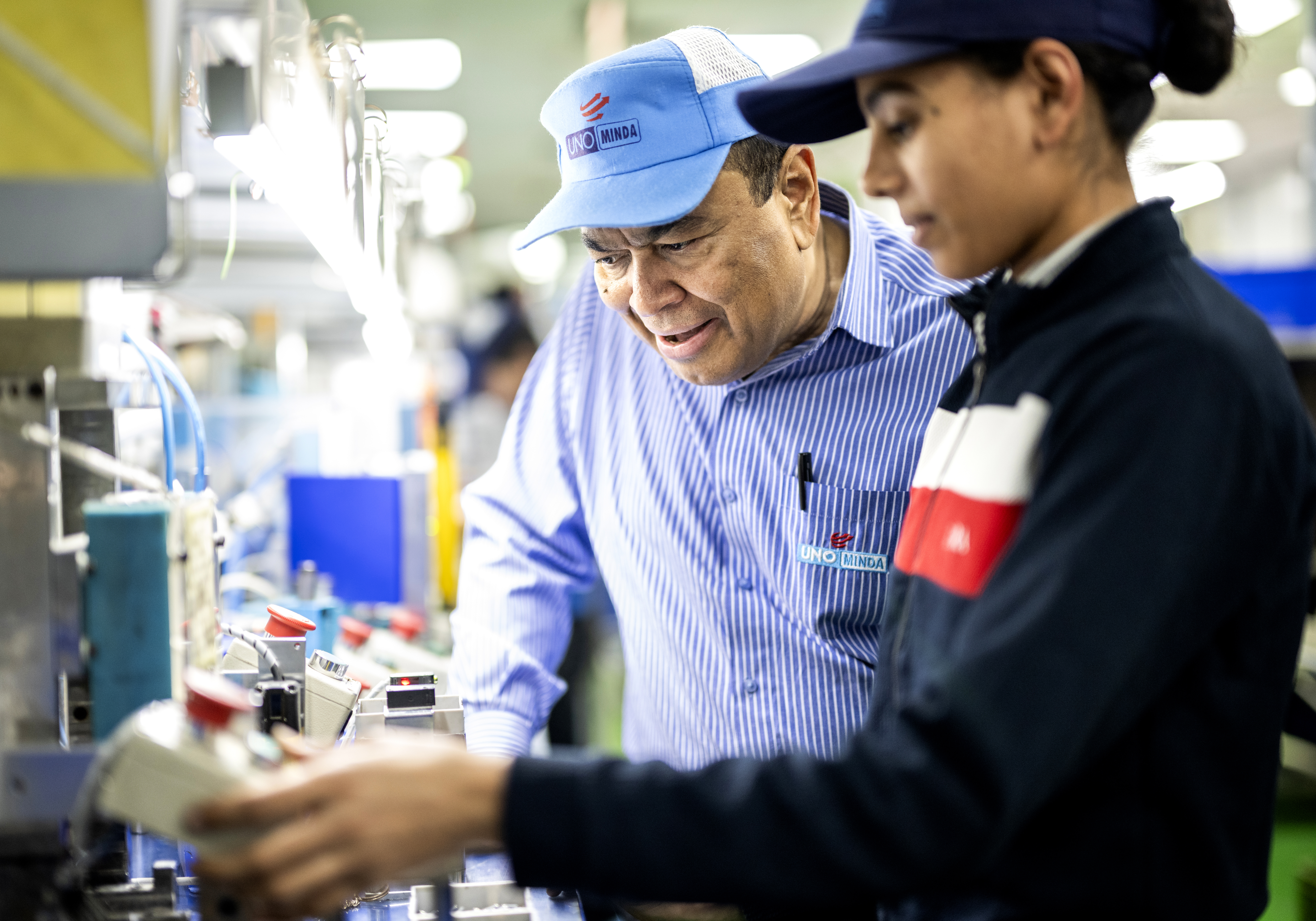
At Uno Minda, thousands of engineers across global R and D centres, software hubs and validation labs work to build proprietary technology and patents. This, he says, is how localisation and global relevance are achieved.
Turning industry voice into action
As ASSOCHAM President, Minda has focused on structuring industry feedback into clear, actionable inputs. Pain points, global best practices and national benefits are presented together, allowing government to act decisively.
The response, he says, has been encouraging. Ministries are listening, engaging and moving. Which reinforces his central belief.
India's manufacturing moment has arrived. With a supportive government, an ambitious industry and a foundation of trust, the country is well placed not just to make for itself, but to build for the world.