India is building at a pace that would have seemed improbable just a decade ago. Highways are stretching further, airports are coming up faster, and industrial corridors are taking shape across the country. For Dheeraj Panda, Managing Director of Ammann India, this is not just growth. It is a shift in how the country thinks about infrastructure.

"This is a very interesting phase," he says, reflecting on the last 10 to 15 years. With a young population and rising aspirations, the demand for infrastructure is not optional anymore. It is essential. Roads, manufacturing, services, logistics, everything is tied together. And the pressure to deliver is constant.
Ammann India has been closely aligned with this momentum, especially in road construction. Over time, its role has expanded beyond roads into concrete applications as well, touching sectors like real estate, industrial construction, and airports. Concrete today is part of nearly 70 percent of projects, whether in roads or buildings, making it central to the broader infrastructure ecosystem.
What stands out in this phase is not just how much India is building, but how it is building.
The country has been averaging between 9,000 to 12,000 kilometres of road construction annually. There was a slight slowdown recently, but Panda expects the pace to pick up again over the next few years. And when it does, it will not look like the past.
"The shift in technology has been significant," he explains.
Earlier, construction was far more segmented. Today, it is increasingly data-driven and interconnected. Machines no longer work in isolation. A plant communicates with a paver, which in turn connects with a compactor. The entire process is more coordinated, more precise.
This interconnected approach is changing execution on the ground. There is less guesswork and more predictability. Timelines are tighter. Expectations are higher. And increasingly, quality is taking centre stage.
There has also been a noticeable shift in how projects are awarded and evaluated. Instead of focusing only on the lowest cost, there is now more emphasis on long-term performance. Contractors are often responsible not just for building roads but for maintaining them for 15 to 30 years.
"That changes behaviour," Panda says. "When you know you are going to maintain the road, you build it differently."
It pushes everyone in the value chain to think beyond immediate delivery and focus on durability and reliability. For equipment manufacturers, it also means moving towards more advanced, intelligent machines that can deliver consistent results.
Sustainability is another area where the conversation has clearly evolved.
In the past, it was often treated as an add-on. Today, it is becoming central to decision-making. One of the most visible changes is the growing focus on recycling in road construction.
India still has a large number of greenfield projects, but it is also entering a phase of expansion, widening existing roads from four lanes to six or even eight. This is where recycling becomes critical.
Instead of relying entirely on fresh raw materials, there is a push to reuse what already exists. Recycled aggregates, industrial waste like slag, and even processed plastic are being explored as part of the mix.
At present, recycling levels are somewhere between 30 to 60 percent, depending on the project and the layer of the road. The top layer, for instance, still relies heavily on conventional materials. But the direction is clear.
"We can technically move to 100 percent recycling," Panda says, "but it will take time."
The challenge is not just technological. It is also about policy, consistency in supply chains, and awareness on the ground. Contractors need to understand how to use these materials effectively. Operators need to be trained. And there has to be clarity on standards.
Ammann's role, in this context, goes beyond selling equipment. The company works closely with contractors, trains operators, and even engages with policymakers and bodies like the Indian Road Congress to demonstrate what is possible.
The sustainability push is visible inside the factory as well.
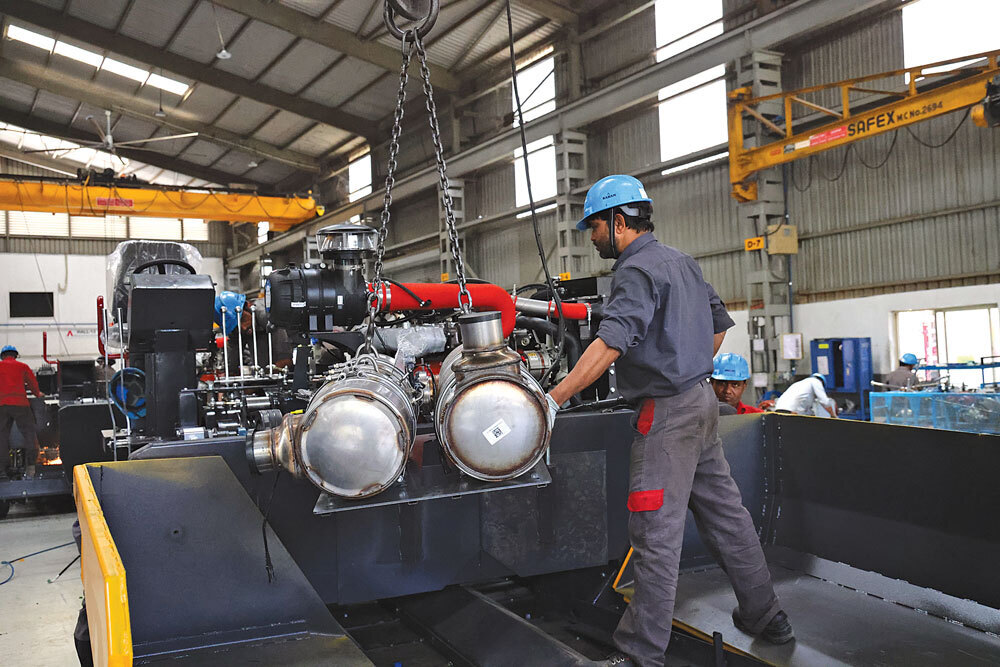
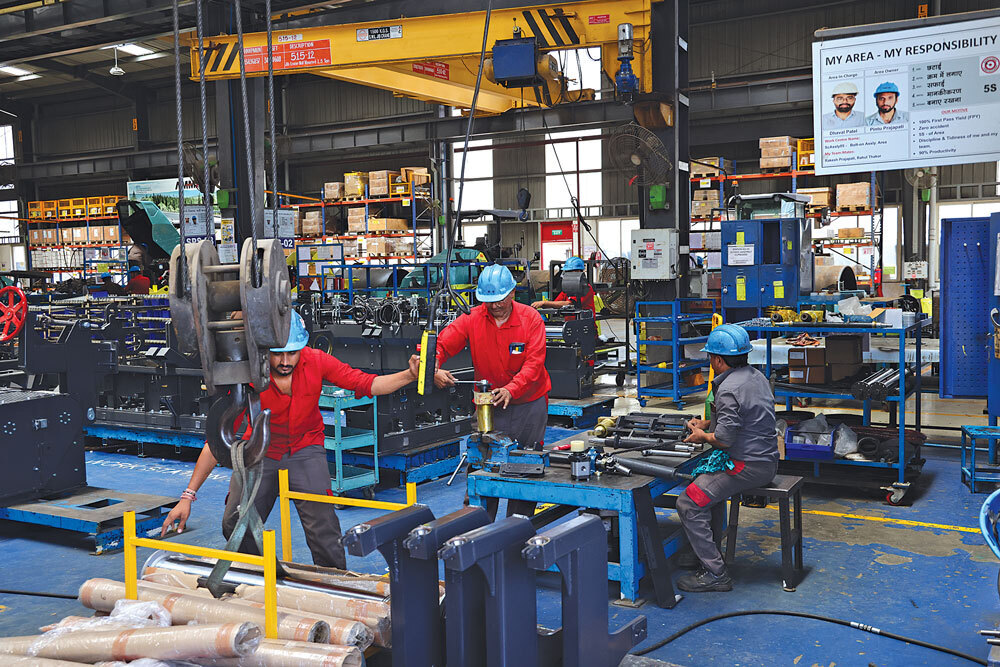
At Ammann India's facility, around 15 percent of energy consumption now comes from solar power. Systems have been redesigned to reduce energy use, whether through more efficient welding technologies or better utilisation of compressed air. Even seemingly small changes, like using high-volume low-speed fans, add up over time.
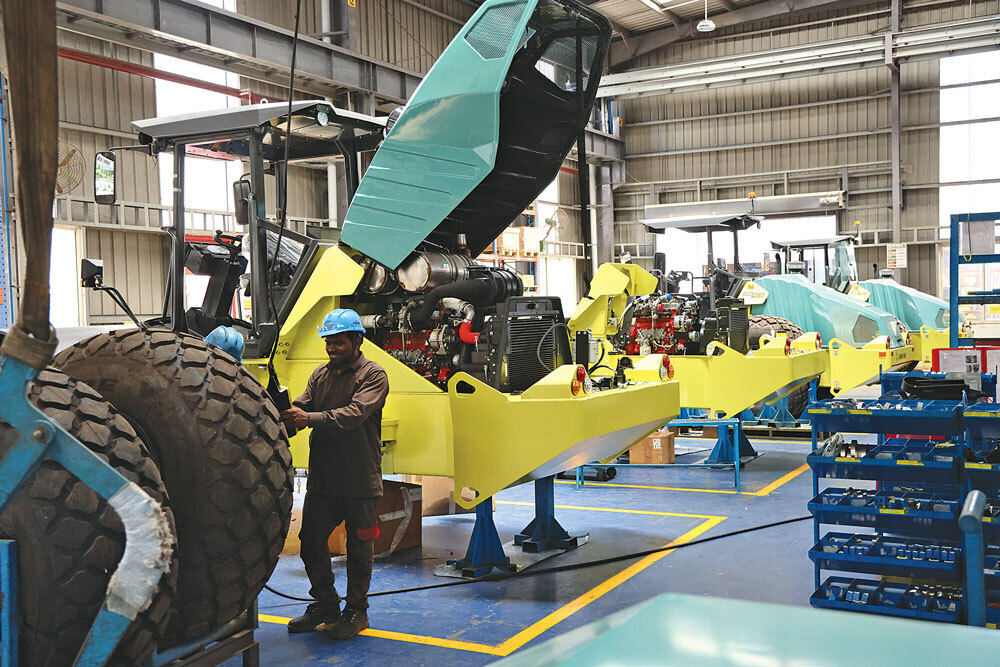
On the equipment side, there has been a steady move towards reducing emissions and fuel consumption. Machines now meet stricter emission norms, and improvements in design are helping bring down fuel usage by about 5 to 6 percent.
Asphalt plants, too, have evolved. They use multi-fuel burners, automated controls, and insulation systems to improve efficiency. Technologies like warm asphalt reduce the need for high temperatures, which in turn lowers fuel consumption and emissions. Filtration systems ensure that dust and particles are captured and reused instead of being released into the environment.
The industry is also talking more about zero-emission equipment, including electric and hydrogen-powered solutions. While these technologies are already available globally, their adoption in India is still limited.
"The challenge is the ecosystem," Panda explains.
Construction equipment often operates in remote locations, where access to reliable power or green hydrogen is not guaranteed. Without that supporting infrastructure, large-scale adoption becomes difficult. However, with the right incentives and policy support, such as carbon credits, the transition could accelerate.
Another important shift has been India's emergence as a manufacturing and export base.
Ammann India now exports about 25 percent of its output to over 70 countries. Markets across Latin America, Africa, the Middle East, and South Asia have opened up, and India is increasingly being seen as a competitive production hub.
This has been enabled by a combination of factors. Labour remains an advantage, but more importantly, the supplier ecosystem has matured significantly. High-precision component manufacturers have set up operations in India, allowing companies to localise production without compromising on quality.
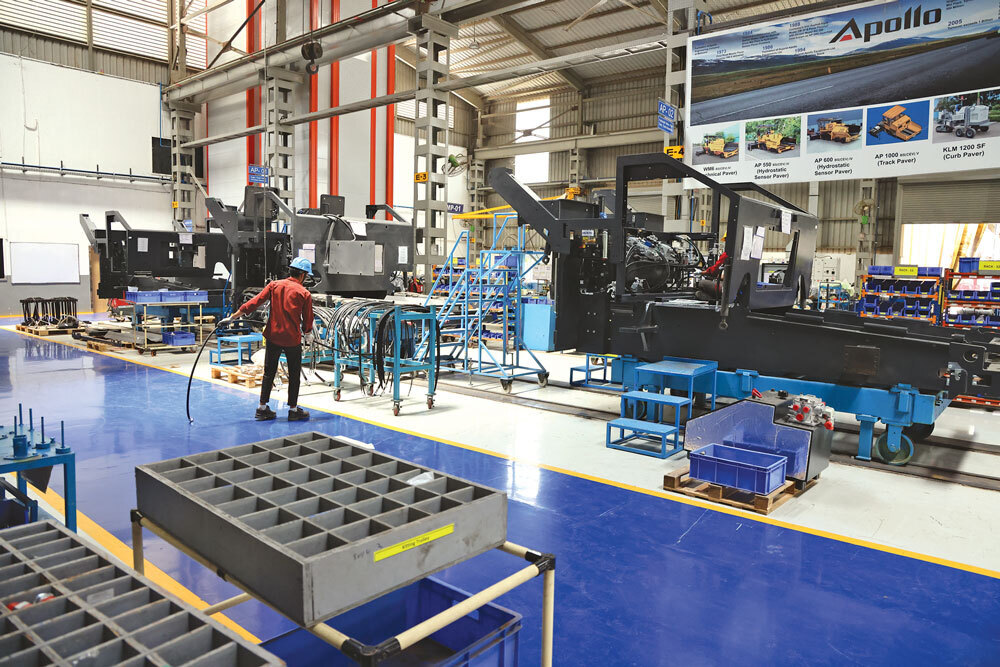
Over time, Ammann's facility has evolved from an assembly unit into a full-scale manufacturing hub. This shift has reduced dependence on imports and improved responsiveness to both domestic and global demand.
Still, none of this works without people.
Even as machines become more advanced and processes more digital, human capability remains critical. Ammann has invested in training through its in-house academy, focusing on operators, technicians, and service teams.
Training is continuous, not occasional. From welding programmes to simulator-based learning, the idea is to ensure that people are comfortable with increasingly sophisticated equipment. Modern machines generate error codes, require digital interfaces, and demand a different level of understanding.
"At the end of the day, it is people efficiency that makes the difference," Panda says.
Looking ahead, the direction seems clear, even if the path has its challenges.
There is strong alignment between industry and policymakers on key priorities. Faster execution, greater sustainability, and better quality are all part of the agenda. There is also a growing recognition that growth and environmental responsibility have to go hand in hand.
India, as Panda puts it, is trying to find that balance.
For companies like Ammann India, this means continuing to invest in technology, strengthening local capabilities, and staying closely connected to the evolving needs of the market.
Because in the end, infrastructure is not just about concrete and asphalt. It is about enabling movement, unlocking opportunities, and connecting people.
And in that sense, every road built today is not just a project completed. It is a step toward the kind of future India is trying to create.