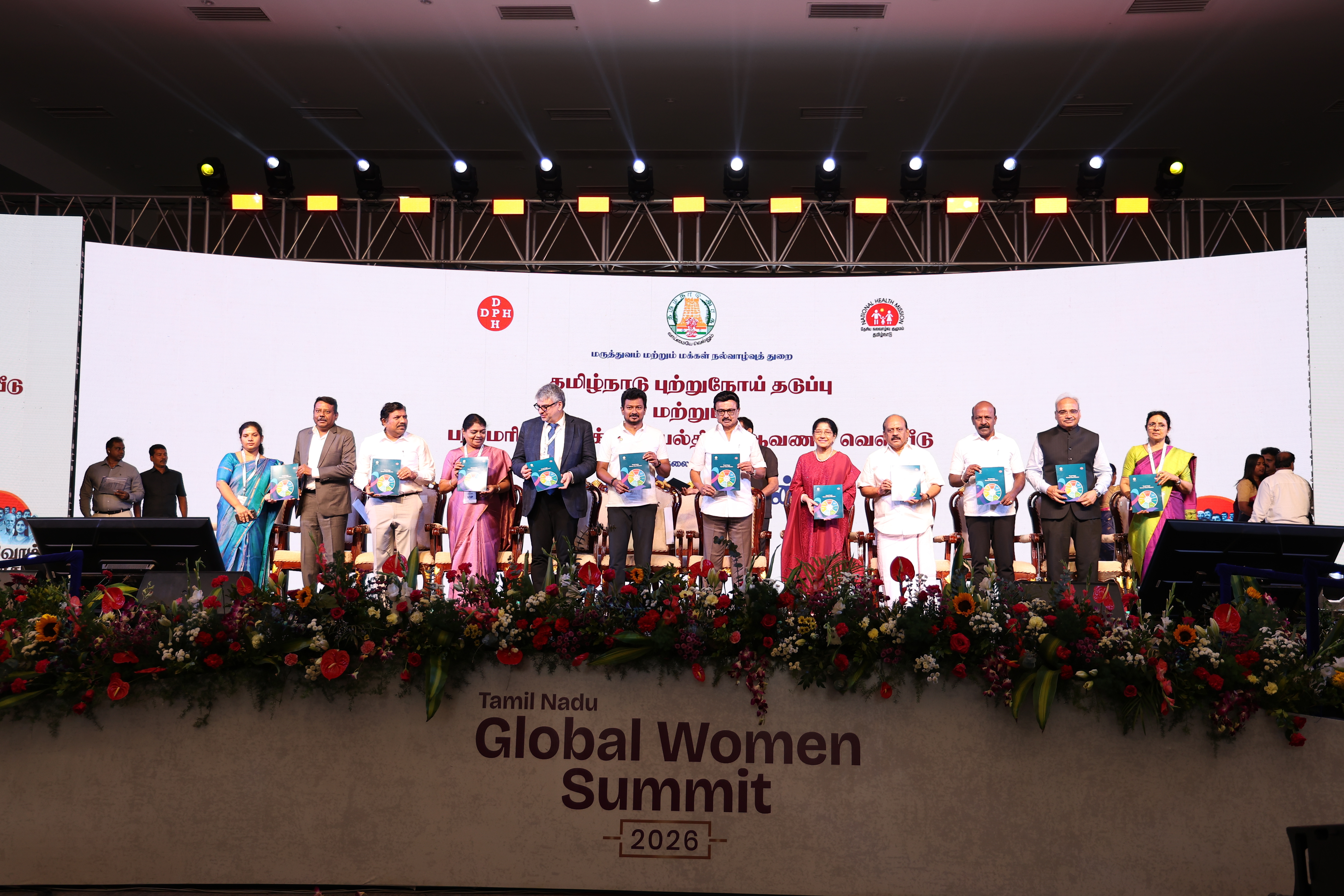
Tamil Nadu has placed women at the centre of its economic ambitions, with the launch of the TNWESafe project and the She Leads campaign signalling a shift from intent to implementation. The initiative, unveiled at the Global Women Summit in Chennai in the presence of Chief Minister M. K. Stalin and Deputy Chief Minister Udhayanidhi Stalin, reflects a governance approach where women's empowerment is directly tied to economic growth.
Unlike traditional welfare-driven narratives, the state's strategy frames women as a workforce and leadership asset. This positioning builds on decades of policy continuity in Tamil Nadu, where investments in education, health and social protection have steadily improved women's access to opportunity.
Several initiatives have contributed to this shift in measurable ways. Free bus travel for women has expanded access to jobs by reducing commuting costs and increasing mobility. The Pudhumai Penn scheme has encouraged girls to stay in education longer, strengthening their entry into formal employment. The development of Thozhi Hostels has addressed safety and accommodation challenges for working women, particularly in urban and industrial clusters. At the same time, nutrition programmes and direct benefit transfers have improved household stability and reduced barriers to workforce participation.
These interventions, while implemented across sectors, have collectively functioned as an enabling framework for women's economic inclusion. The results are already visible. Female workforce participation in Tamil Nadu remains higher than the national average, with strong representation in manufacturing, agriculture and services. Women from the state account for a significant share of India's workforce in registered manufacturing units, reinforcing their role in industrial growth.
The She Leads campaign attempts to build on this foundation with a more structured and outcome-driven approach. Under TNWESafe, women's employment, entrepreneurship and leadership are being pursued through defined targets and institutional mechanisms. Partnerships with industry, financial institutions and knowledge organisations, formalised through agreements at the summit, are expected to play a key role in delivering skilling, job creation and safer workplaces.
The political backing of the initiative is significant. Visible leadership from the top is expected to ensure coordination across departments and sustained financing, both of which have historically been critical to Tamil Nadu's policy execution.
The state's broader ambition to become a one trillion-dollar economy by 2030 is closely tied to this strategy. By referring to Tamil Nadu as Magalir Nadu, the government has underscored a long-standing policy direction that prioritises women's agency and participation. The current phase seeks to move beyond access and participation towards leadership and decision-making roles.
As the state scales its economic ambitions, the focus is shifting to how effectively women can be integrated into growth sectors and leadership pipelines. The success of this approach will depend on whether the existing policy ecosystem can translate into sustained employment, entrepreneurship and upward mobility.
Tamil Nadu's model suggests that women's empowerment, when embedded within economic planning and backed by institutional commitment, can move from being a social objective to a growth imperative.