For many Indian businesses, the conflict in West Asia is not something they are watching on the news anymore. It is something they are dealing with every day.
A delayed shipment here. A sudden spike in freight costs there. A supplier who suddenly cannot commit to timelines. These small disruptions are adding up, and India Inc is starting to feel the strain in ways that are both immediate and unsettling.
The connection may not seem obvious at first. But scratch the surface, and it becomes clear just how deeply India's economy is tied to what happens in that region.
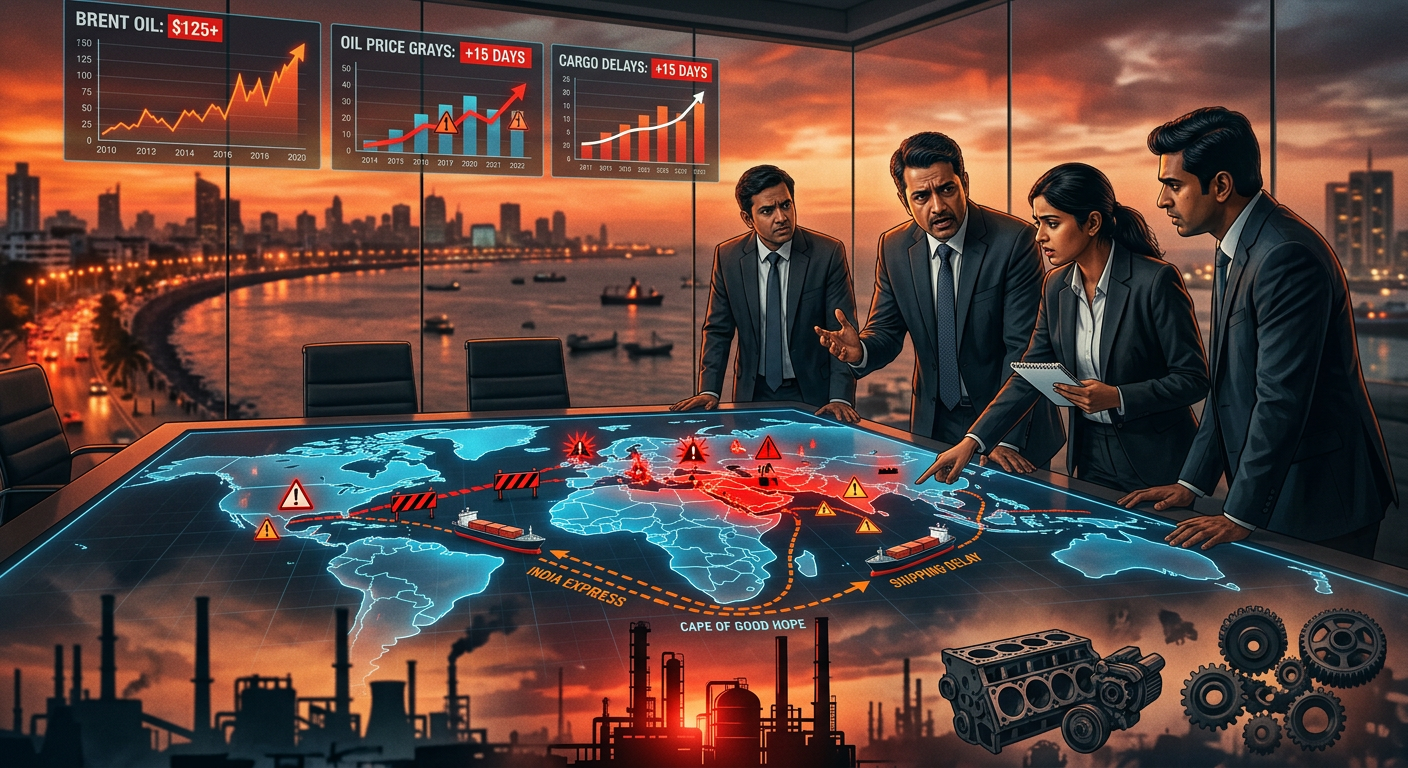
A large share of India's oil and gas flows through the Gulf. When tensions rise, even without a full-blown disruption, markets react instantly. Oil prices climb, shipping routes become riskier, and insurance premiums shoot up. For companies back home, this translates into higher input costs and thinner margins.
But energy is only one part of the story.
The bigger issue right now is logistics. With parts of the Red Sea and surrounding routes under threat, many ships are avoiding the region altogether. That means longer journeys, higher fuel consumption, and delayed deliveries. What used to arrive in three weeks may now take five or six. And in industries where timing is everything, that delay can hurt.
Think of an auto manufacturer waiting on a critical component, or a pharmaceutical company dependent on a specific chemical input. Even a short delay can slow down production. Multiply that across sectors, and you begin to see why businesses are worried.
Exporters are among the first to feel the pinch. Whether it is textiles, engineering goods, or agricultural products, getting shipments out on time has become more complicated and more expensive. Some companies are rerouting cargo; others are absorbing higher costs just to maintain relationships with overseas buyers.
Neither option is ideal.
There is also a quiet ripple effect on everyday products. When the cost of petrochemicals rises, it impacts everything from packaging to plastics. That eventually finds its way to the consumer. It may show up as a slightly higher price on a bottle of soft drink or a packaged snack, but behind that small increase is a long chain of global disruptions.
What makes this situation particularly challenging is the uncertainty. Businesses can deal with high costs if they know what to expect. What is harder to manage is not knowing how long the disruption will last or how much worse it could get.
This unpredictability is forcing companies to rethink how they operate.
For years, efficiency was the name of the game. Supply chains were designed to be lean, fast, and cost-effective. The idea was to source from the cheapest supplier, keep inventory low, and rely on smooth global logistics.
That model is now being tested.
Companies are beginning to build buffers. Some are increasing inventory levels to guard against delays. Others are looking for alternative suppliers, even if that means paying a bit more. There is also a growing interest in diversifying sourcing across regions, so that a disruption in one area does not bring everything to a halt.
These are not quick fixes. They take time, money, and careful planning. But for many businesses, they are becoming necessary.
The government, for its part, is trying to stay ahead of the curve. There have been efforts to support exporters dealing with rising logistics costs, and officials are closely monitoring energy supplies and prices. The broader aim is to prevent short-term disruptions from turning into long-term economic damage.
At the same time, there is a recognition that India needs to reduce its vulnerability to such shocks. That means diversifying energy sources, strengthening domestic manufacturing, and building more resilient supply chains.

None of this happens overnight. But moments like this tend to accelerate change.
There is also a more subtle shift underway in how businesses think about risk. Geopolitics, once seen as something distant and abstract, is now firmly on the radar of corporate decision-makers. It is influencing everything from sourcing strategies to investment plans.
And perhaps that is the biggest takeaway.
The world that businesses operate in is no longer as predictable as it once seemed. Events in one part of the globe can quickly spill over into others, disrupting carefully laid plans. For India Inc, the challenge is not just to navigate the current situation, but to prepare for a future where such disruptions may become more frequent.
For now, companies are adapting as best as they can. They are renegotiating contracts, exploring new routes, and trying to stay flexible in a fast-changing environment.