Healthcare is no longer viewed simply as a service sector. Around the world, it has become a strategic pillar of economic growth, technological advancement and national resilience. India is no exception. The country's growing emphasis on self-reliance, domestic manufacturing, advanced diagnostics and digital healthcare is creating an environment where companies are expected to do much more than manufacture products. They are expected to solve real problems, build trust and contribute to the nation's healthcare ecosystem.
Lord's Mark Industries Limited is one such company that has steadily transformed itself over the years. What began as a diversified manufacturing enterprise has evolved into an integrated healthcare, diagnostics and MedTech organisation with ambitions that extend well beyond business growth. From advanced diagnostic solutions and laboratory services to artificial intelligence driven healthcare applications and modern manufacturing facilities, the company has positioned itself at the intersection of technology, healthcare and innovation.
For Dr Sachidanand Upadhyay, Managing Director and CEO, this evolution has never been about chasing the next opportunity. Instead, it has been about anticipating where India is headed and ensuring the company is prepared to contribute meaningfully to that journey. Speaking to ET Now Machinist, he reflects on the lessons that shaped his entrepreneurial journey, why healthcare became Lord's Mark's natural calling and what it will take for India to emerge as a trusted global hub for healthcare manufacturing.
A Vision Beyond Business
Every successful enterprise has a defining purpose. For some, it is market leadership. For others, it is innovation or financial growth. For Dr Upadhyay, the motivation has always been something more enduring.
"When we started, the objective was never to build the biggest company," he says. "It was to build a company that remained relevant as India's needs evolved."
That philosophy continues to define the organisation even today. Rather than expanding into sectors based solely on market opportunities, Lord's Mark has consistently looked at industries where it believes it can create long term value for both society and the business.

As India's healthcare requirements became more complex, the company recognised that the country would increasingly require stronger domestic capabilities in diagnostics, medical technology and healthcare manufacturing. This realisation gradually shaped its strategic direction.
Instead of viewing healthcare as another business vertical, Lord's Mark began looking at it as an ecosystem where manufacturing, innovation, technology and patient care could work together. Every investment was guided by a simple but important question. Would it improve access to quality healthcare, enhance affordability or strengthen India's healthcare capabilities?
According to Dr Upadhyay, the company's growth is a consequence of consistently answering that question with conviction.
Healthcare with a Higher Purpose
Healthcare is one of the few industries where commercial success and social impact naturally complement each other. That belief has been central to Lord's Mark's transformation over the past several years.
Dr Upadhyay explains that the company recognised early that India's healthcare priorities were changing rapidly. Rising demand for quality diagnostics, increasing dependence on technology and a stronger push for domestic manufacturing presented an opportunity to create sustainable businesses while addressing critical national needs.
"We did not look at healthcare as a short-term opportunity," he says. "We looked at where the sector would be over the next decade."
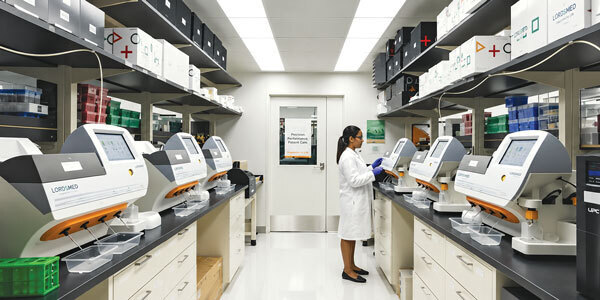
That long term perspective encouraged the company to strengthen its presence across diagnostics, laboratory services, MedTech solutions and digital healthcare. Instead of focusing on individual products, the emphasis has remained on building capabilities that could evolve alongside the healthcare ecosystem itself.
The approach also reflects a broader belief that businesses create lasting relevance when they solve meaningful problems.
For Dr Upadhyay, profitability and purpose are not competing priorities. They reinforce each other.
Investments in domestic manufacturing, research partnerships and advanced healthcare technologies are commercially viable precisely because they respond to genuine healthcare challenges. In his view, businesses that contribute to society ultimately create stronger and more sustainable value for shareholders as well.
Building India's MedTech Capability
India's ambition to become a global manufacturing powerhouse has gained significant momentum over the past few years. While much of the conversation has centred on electronics, semiconductors and automotive manufacturing, healthcare manufacturing is quietly emerging as one of the country's biggest opportunities.

Dr Upadhyay believes India has the potential to move well beyond being recognised as a cost competitive manufacturing destination.
"The next phase of growth will be defined by innovation, quality and scientific capability," he says.
He points to several factors working in India's favour. Policy support, a highly skilled workforce, expanding research capabilities and increasing investments in manufacturing have collectively created an environment where Indian companies can compete with global players.
Lord's Mark has aligned its own growth strategy with this larger national vision. The company continues to strengthen its manufacturing capabilities in diagnostics and in vitro diagnostics while investing in regulated product development that meets international quality standards.
The objective is not only to serve domestic healthcare requirements but also to build products capable of competing in global markets.
For Indian manufacturers, this represents a significant shift in thinking.
Competing internationally is no longer about offering lower production costs. It is about demonstrating consistent quality, technological capability and reliability. Dr Upadhyay believes companies that successfully combine these strengths will define India's next chapter in healthcare manufacturing.
Artificial Intelligence with Human Judgment
Few technologies have generated as much excitement across healthcare as artificial intelligence.
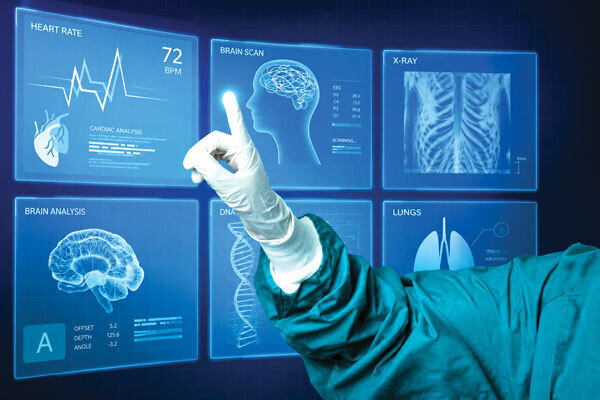
From disease prediction and diagnostic imaging to remote patient monitoring and clinical decision support, AI is expected to reshape the way healthcare is delivered.
Lord's Mark has already invested in AI driven healthcare solutions, including breast cancer detection and advanced dialysis technologies, reflecting the company's belief that digital innovation will play a central role in improving patient outcomes.
Yet, despite the enthusiasm surrounding artificial intelligence, Dr Upadhyay believes healthcare must remain fundamentally human.
"Technology should support doctors, not replace them," he says.
Artificial intelligence can help healthcare professionals make faster and better-informed decisions, particularly in diagnostics where speed and accuracy often determine outcomes. It can reduce manual effort, improve efficiency and enable more personalised patient care.
However, clinical judgement, ethics and patient trust cannot be automated.
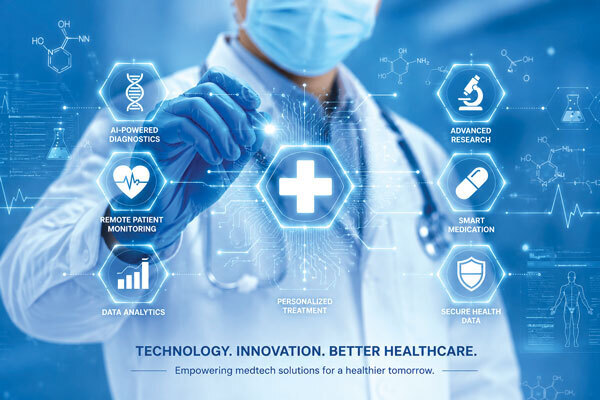
According to Dr Upadhyay, responsible innovation will determine how successfully AI transforms healthcare. Every solution must be supported by strong clinical validation, operate within clearly defined regulatory frameworks and protect patient data with the highest standards of privacy.
Only then can technology become a trusted partner in healthcare rather than simply another digital tool.
The conversation around AI often focuses on what technology can achieve. Dr Upadhyay believes the more important question is how responsibly it is implemented. For healthcare, that distinction will make all the difference.
Innovation Through Collaboration
For Dr Upadhyay, innovation is rarely the result of working in isolation. Some of Lord's Mark's most significant advancements have come through partnerships with institutions such as IIT Bombay, C MET and public sector organisations. These collaborations bring together scientific research, manufacturing expertise and industry insights, enabling solutions to reach patients faster and at a larger scale. As healthcare challenges become more complex, he believes collaboration will remain one of the strongest drivers of innovation.
Why Trust Matters More Than Scale
As Lord's Mark expands its footprint across international markets and embarks on its journey as a publicly listed company, governance, transparency and quality have become even more critical. While India's manufacturing sector has earned global recognition for its scale, Dr Upadhyay believes the next decade will be defined by consistency and credibility. In healthcare, trust is built over years through reliable products, strong regulatory standards and an unwavering commitment to quality. Companies that invest in technology, research and compliance, he says, will shape India's reputation as a dependable global manufacturing partner.
Building an Institution for the Future
People remain at the heart of Lord's Mark's growth story. Dr Upadhyay believes technical expertise alone is no longer enough. The leaders of tomorrow must be adaptable, collaborative and willing to learn in an industry that is constantly evolving. Reflecting on his own entrepreneurial journey, he says the greatest lesson has been patience. Building a lasting organisation is less about chasing rapid growth and more about solving meaningful problems with discipline and integrity.