There is a certain clarity that comes from starting at the very bottom. For Prashanth Doreswamy, that clarity was forged not in boardrooms, but on the shop floor, amid machines, processes, and people who defined the rhythm of manufacturing long before buzzwords like digital transformation and AI integration entered the lexicon.
His early years at Siemens VDO were not just about learning systems; they were about understanding people and principles. "I was taught a simple, enduring idea, do what is right for your conscience," he reflects. It is a line that sounds deceptively simple yet carries the weight of a leadership philosophy that has stayed intact through decades of change.
Those early days were also marked by a sense of independence that many professionals remember vividly but rarely articulate. The first salary, the first major purchase, a Hero Honda motorcycle, and the quiet, immediate realisation of responsibility. "You suddenly understand that you can't ask your parents for money anymore," he says. It's a moment that transforms work from obligation into ownership.
That sense of ownership would go on to define his journey.
Leadership Beyond Metrics
Today, as the President and CEO of Continental India, Doreswamy sits at the helm of an organisation navigating one of the most transformative phases in automotive history. Yet, his definition of leadership remains refreshingly grounded.
"Leadership is about people and the reality of everyday life, that's why it is so difficult," he says. In a world obsessed with measurable outcomes, he is quick to dismantle simplistic assumptions. If leadership were about money, the wealthy would lead. If it were about academic excellence, toppers would dominate boardrooms. But neither is true.
Instead, he frames leadership as the ability to make a meaningful difference, in people's lives and in society at large.
This perspective becomes even more relevant as workplaces evolve from knowledge-driven ecosystems to what he calls wisdom-based environments. The shift is subtle but profound. Information is abundant; what differentiates leaders now is their ability to interpret, connect, and guide.
Emotional intelligence, therefore, is no longer optional. It is foundational.
"Once you are a leader, your face no longer belongs to you," he says, almost philosophically. "You owe it to your team to bring confidence, even on difficult days." It's a reminder that leadership is as much about emotional presence as it is about strategic direction.
He is also candid about imperfection. "Perfect leaders don't exist," he states plainly. Instead of chasing an idealised version of leadership, he advocates authenticity, embracing both strengths and limitations. It is this authenticity, he believes, that builds trust.
And trust, in modern organisations, is currency.
Building Continental's India Story
Doreswamy's journey mirrors the evolution of the automotive sector itself. Over the years, Continental India has transformed from a conventional manufacturing presence into a hub of innovation and advanced engineering.
One of the most significant inflection points was a deliberate alignment of organisational structure with future growth drivers. This was not just about scaling operations; it was about rethinking capabilities.
"We looked at gaps closely and transformed underutilised roles into drivers of innovation," he explains.
A defining milestone was the expansion of the company's Tech Centre, from 2,000 to 7,000 employees. But growth, in this context, was not merely numerical. It was structural and cultural. The centre evolved into a fully agile organization, focused on high-performance products and automotive electronics.
Equally important was the emphasis on localisation. By investing early and deeply in local capabilities, Continental was able to make global technologies more accessible to the Indian market. It is a strategy that goes beyond cost advantages, it embeds innovation closer to the point of use.
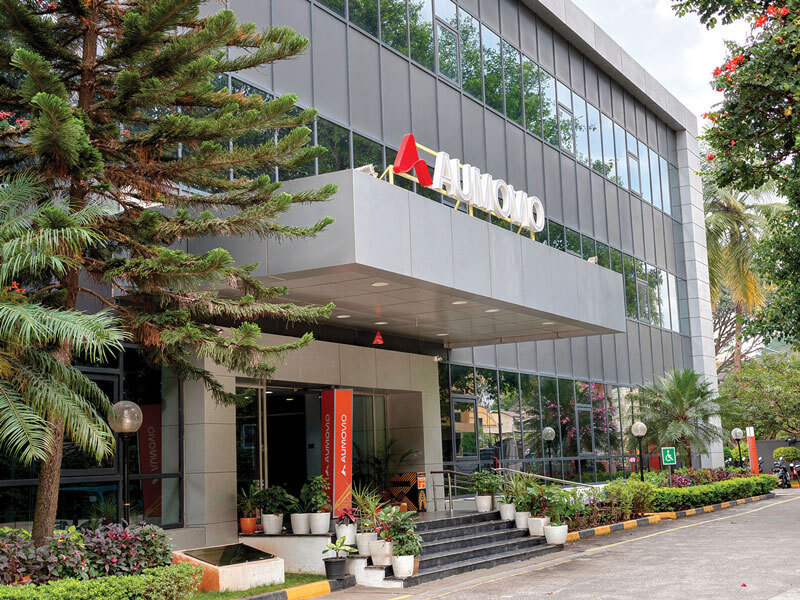
At AUMOVIO, this philosophy has taken on a new dimension. The integration of machine learning into processes like Automated Optical Inspection, referred to as Magic AOI, and the deployment of scalable manufacturing execution systems signal a future where manufacturing is not just efficient, but intelligent.
The Curiosity Quotient
Ask Doreswamy what defines a world-class plant today, and he doesn't talk about automation levels or throughput metrics. Instead, he distills it to a single word, curiosity.
"Inquisitiveness is the key ingredient driving innovation," he says.
It is an unusual metric in an industry traditionally defined by precision and predictability. But in a rapidly changing landscape, curiosity becomes the engine of adaptation.
A culture of continuous curiosity, as he describes it, is one where experimentation is encouraged, failure is not feared, and learning is constant. In such environments, the emphasis shifts from avoiding mistakes to maximising insights.
This mindset is particularly critical as manufacturing transitions into uncharted territory, where hardware, software, and data converge.
The Reality of Localisation
Few topics in Indian manufacturing are as widely discussed, and as complex, as localisation. For Doreswamy, the journey has been both rewarding and challenging.
What has worked well is the "In India, For India" approach. By empowering local engineering teams to take ownership of design and development, Continental has been able to achieve cost and performance benchmarks that global templates often miss.
However, the challenges lie deeper in the supply chain.
Building a robust Tier-2 and Tier-3 ecosystem, he admits, has been harder than anticipated. Achieving excellence within one's own facilities is one thing; ensuring the same standards across an extended network is another.
"Zero-defect thinking cannot be isolated," he points out. It requires consistent mentoring, long-term commitment, and a willingness to invest in capability building beyond immediate returns.
In many ways, localisation is not just an operational strategy, it is an ecosystem transformation.
India's Manufacturing Moment
India's emergence as a manufacturing hub is no longer speculative, it is visible. Strong domestic demand, a vast talent pool, and policy initiatives like PLI schemes and Atmanirbhar Bharat have created momentum.
Doreswamy acknowledges this progress but remains pragmatic.
"Supply chain efficiencies and fluctuating logistics costs still need urgent attention," he notes. Global geopolitical tensions have introduced volatility that cannot be ignored. Additionally, gaps in high-end manufacturing capabilities and specialised skills continue to pose challenges.
Yet, he remains optimistic. With the right focus on advanced technologies and structural improvements, India has the potential to compete at a global level, not just in scale, but in sophistication.
Manufacturing Meets Software
Perhaps the most defining shift in the automotive sector today is the move towards software-defined vehicles. For Doreswamy, this is not an incremental change, it is a fundamental reinvention.
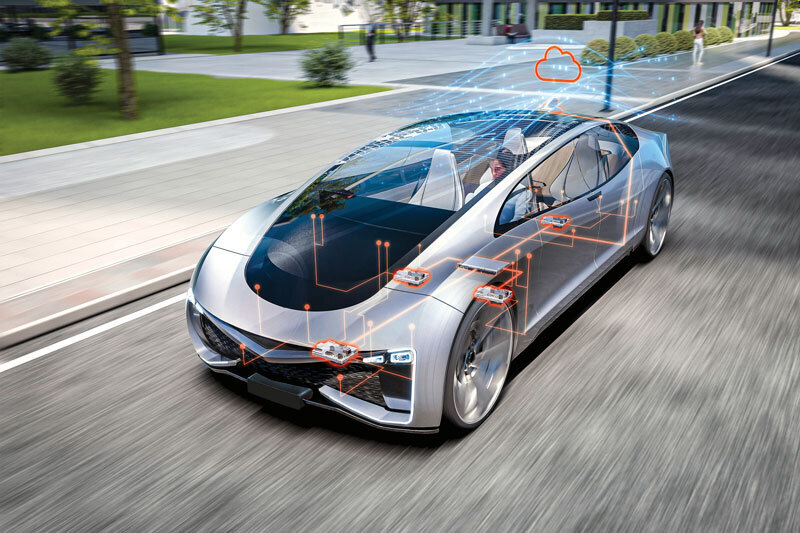
Through AUMOVIO, the organisation is positioning itself at the forefront of this transition. The integration of AI, data analytics, and over-the-air updates is redefining not just how vehicles function, but how they evolve over time.
"A vehicle can actually get better after you buy it," he says. It's a statement that would have seemed improbable a decade ago but is now increasingly becoming reality.
This shift has profound implications for manufacturing.
Traditionally, the focus was on precision and repeatability in physical processes. Today, the environment is far more dynamic. Data-driven decision-making, software feedback loops, and system-level thinking are becoming integral to shop floor operations.
Manufacturing, in this context, is no longer a static process, it is an adaptive ecosystem.
Bridging Two Worlds
One of the most interesting challenges in this new paradigm is bringing together teams that operate in fundamentally different domains, mechanical engineers and software developers.
"The key is creating a shared language and purpose," Doreswamy explains.
By integrating teams early in the product lifecycle and encouraging cross-functional collaboration, organisations can break down silos that traditionally hinder innovation. The concept of bridge talent, individuals who understand both embedded systems and manufacturing processes, becomes critical.
Equally important is the cultural shift. Removing rigid hierarchies and fostering curiosity allows diverse perspectives to converge into cohesive solutions.
In such environments, differences are not obstacles, they are advantages.
The New Talent Equation
As the industry evolves, so do its expectations from talent.
Technical expertise, while still essential, is no longer sufficient. Adaptability and learning agility have emerged as key differentiators. The pace of change ensures that today's knowledge may become obsolete tomorrow.
"Collaboration skills are now non-negotiable," Doreswamy emphasises.
Innovation, after all, happens at the intersection of disciplines. Engineers who can think beyond their immediate domain, who understand software, data, and systems thinking, are better equipped to navigate this complexity.
It is a shift that redefines what it means to be an engineer in the modern era.
Navigating Uncertainty
If there is one constant in today's automotive landscape, it is uncertainty. The simultaneous push towards electrification, autonomy, and software-defined systems has created a level of disruption that is unprecedented.
For Doreswamy, this phase is both the most uncertain and the most exciting.
The approach to navigating it is anchored in a balance, respecting engineering legacy while embracing new paradigms. Increased investment in R&D, a focus on platform thinking, and a willingness to challenge established assumptions are central to this strategy.
Agility, he believes, is not just an organisational capability, it is a mindset.
Staying Grounded
In the midst of such rapid change, staying grounded becomes essential. For Doreswamy, this comes from simple routines, time with family, moments outdoors, and the discipline of reflection.
"Stepping back gives you sharper perspective," he says.
Equally important is trust. By empowering teams and enabling ownership, leaders can create space, not just for themselves, but for others to grow.
Leadership, in this sense, is not about constant motion. It is about clarity.
A Simple, Powerful Advice
For those entering manufacturing today, his advice is straightforward, be curious and embrace change early.
The industry is no longer confined to mechanical systems. It sits at the intersection of hardware, software, data, and sustainability. Those who thrive will be the ones who continuously learn, adapt, and remain open to new ways of thinking.
In a world defined by rapid transformation, curiosity is not just an advantage.
It is the only one that lasts.