There is something quietly powerful about building without urgency.
In a world that celebrates speed, scale and constant reinvention, Sanjeev Pendharkar approaches business with a very different lens. For him, Vicco Laboratories has never been about chasing the next quarter. It has always been about standing the test of time.
"Longevity is not a grand philosophy," he says. "It is much simpler than that. You just ask yourself if what you are doing today will still make sense twenty years from now."
That question, he admits, slows things down. It removes the temptation of quick wins. But it also brings a certain clarity. Decisions become less reactive and more deliberate. In many ways, it is not about what to do, but what not to do.
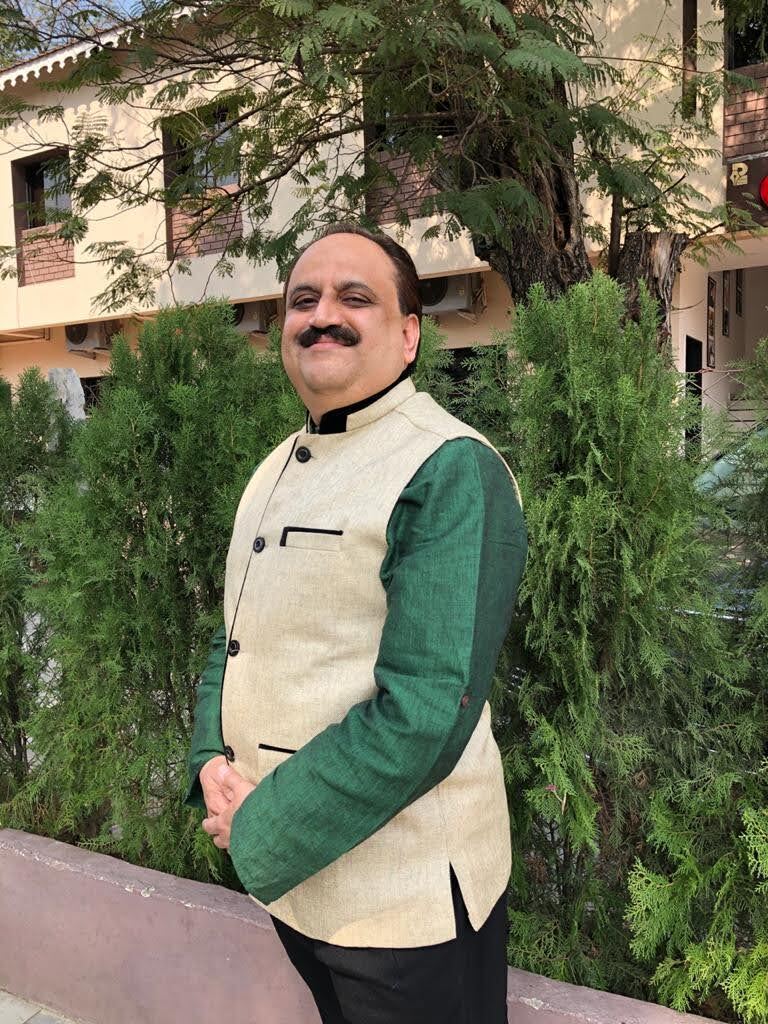
"The moment you start chasing short term validation, you begin diluting something that took decades to build," he says.
And so, restraint becomes a strategy. Quiet, consistent, and often invisible.
Built on belief, not opportunity
Vicco's origins are often told as a story of struggle. A man going door to door, selling toothpowder, building a business from scratch.
But for Pendharkar, what matters is not the hardship. It is the directness.
"There was no layer between the product and the person using it," he says. "No campaign, no agency. Just an honest conversation about whether it worked."
That simplicity continues to guide the company even today. Despite decades of growth, the idea of staying close to the consumer remains central.
It also answers a deeper question. Why does Vicco exist?
"We did not start as a business looking for a market," he says. "We started as a belief."
A belief in formulations. In their ability to serve ordinary Indian families. The business came after that belief, not before it.
And when decisions become difficult, that belief still acts as a compass.

"What would an honest man, standing at a stranger's door with nothing but his product and his word, be comfortable saying?" he asks.
It is a question that continues to shape the company's choices.
Holding ground when the market moved on
There were times when staying rooted in Ayurveda felt like swimming against the tide.
Chemical formulations dominated shelves. Multinational brands brought in strong scientific narratives. Consumers were drawn to what felt new and modern.
Internally, the debate was real.
"Were we being stubborn or were we being principled?" Pendharkar recalls.
From the outside, the two can look the same.
What kept Vicco steady was not ideology, but the consumer. A large group of people who had not moved away. Not out of nostalgia, but because the product worked for them.
"They knew exactly what was in it," he says. "That is a different kind of loyalty."
It is not driven by branding. It is built on trust.
Years later, as the global conversation shifted toward clean beauty and ingredient transparency, Vicco found itself in familiar territory.
"What surprised us was how long it took others to arrive there," he says.

A different way of building
The modern business narrative is dominated by speed.
Funding rounds, valuations and exits have become the markers of success. For many, that is the only way to build.
Vicco has never subscribed to that model.
"We have never raised external capital," Pendharkar says. "Every decision is made by people who have to live with its consequences for decades."
That changes the way you think.
Without the pressure of an exit, the focus shifts. From looking good in the short term to lasting in the long term. From chasing attention to building substance.
"Patience is not something I chose," he says. "It is something I arrived at after seeing what impatience costs."
Over time, that patience has allowed Vicco to outlast competitors who were once considered stronger. Better funded. Better marketed. More visible.
But visibility fades. What remains is consistency.
How trust is really built
For Pendharkar, the idea of a "cult brand" is often misunderstood.
It is not something that can be created deliberately. It is something that accumulates.
"Consistency, mostly," he says when asked what builds emotional connection.
Not consistency in messaging, but in performance. The product doing the same thing, the same way, every single time.
"It shows up every morning, on the same shelf, for decades," he says. "And somewhere in that repetition, people begin to trust it."
There is also a quiet honesty in knowing exactly what goes into a product. No complex terminology. No hidden ingredients.
"That creates a different kind of trust," he explains. "Almost personal."
Over time, these small, consistent experiences build something much larger. Not through campaigns, but through everyday interactions.

Between integrity and inertia
Not every decision has been perfect.
Pendharkar is candid about the moments where holding on to tradition slowed progress. Where what felt like protecting the brand may have actually limited it.
"Some things we chose not to do deliberately," he says. "But some things were simply too slow."
Packaging is one example. For a long time, any change was seen as a risk.
But over time, it became clear that visibility matters. A consumer should not have to search for a product.
"Accessibility is not a compromise of values," he says.
Modernisation, he believes, is not a single decision. It is a series of small choices made over time.
Some were right. Some could have been faster.
Recognising the difference is important.
When competition becomes validation
The Ayurvedic and natural products space today is more crowded than ever.
New brands enter with strong marketing, large budgets and wide distribution. For many, this would feel like a threat.
Pendharkar sees it differently.
"When we were one of the few voices, we spent a lot of energy just convincing people the category was worth trusting," he says.
Today, that work has already been done.
Every new entrant brings more consumers into the category. It normalises the choice.
But once consumers enter, they begin to ask deeper questions.
What is actually in the product?
Does the brand truly believe in what it is saying?
How long has it been doing this?
That is where experience matters.
"Seventy years is not a claim," he says. "It is a track record."
And that is something that cannot be created overnight.
Taking Ayurveda global, without dilution
As Vicco expands internationally, the challenge shifts.
In India, Ayurveda does not need explanation. It is part of everyday life. It exists in memory, in habits, in familiarity.
Globally, the context is different.
Consumers approach Ayurveda through wellness trends and ingredient awareness. They are curious, but unfamiliar.
This requires context.
"Not justification," Pendharkar clarifies. "But grounding."
At the same time, there is a clear line.
"We are not interested in sanding off what makes us specific," he says.
Taking an Indian brand global does not mean making it generic. It means carrying its identity with confidence.
The goal is not to appeal to everyone. It is to connect with those who value authenticity.
Embracing access, questioning noise
Digital platforms have transformed how brands reach consumers.
For Vicco, this has opened up new possibilities. Reaching smaller towns. Engaging directly. Understanding feedback in real time.
"I embrace the access," Pendharkar says.
But he remains cautious about the noise.
"Distribution often gets mistaken for brand building," he explains.
Just because a product can reach consumers quickly does not mean it has built trust.
That trust, he believes, still comes from performance over time.
The approach has been to adopt what is useful, while staying grounded in fundamentals.
Better reach. Faster feedback. Stronger relationships.
But always anchored in consistency.
Staying relevant without losing identity
Vicco carries strong recall. Generations have grown up with its products.
But nostalgia, Pendharkar believes, can be both an asset and a limitation.
"The moment a brand starts living only in memory, it stops building," he says.
The key is to separate the core from the expression.
The core remains unchanged. The formulation. The honesty. The promise.
But the expression must evolve.
A younger consumer discovers brands differently. Through different platforms, voices and experiences.
"Our job is to be present there without pretending to be something we are not," he says.
That balance is not easy. But it is necessary.
The decade ahead
When asked to define Vicco's future, Pendharkar does not speak of revenue or expansion.
Instead, he offers a simple thought.
"The next decade will be when the world catches up to what one man with a toothpowder already knew."
It is a quiet statement. But it carries the weight of everything the company stands for.
In a world that is constantly chasing what is next, Vicco's story is a reminder of something else.
That sometimes, the most powerful way forward is to stay true to what has always worked.