For General Instruments Consortium (GIC), manufacturing has never been just about instruments. It has been about trust, precision, and continuity. Founded in 1966 by Sarvadnya Kulkarni's grandfather, the company today stands at a significant intersection of legacy and transformation. As a third-generation leader, Kulkarni carries forward nearly six decades of history while reimagining what an Indian instrumentation company can become on the global stage.
Kulkarni joined the family business four years ago, but his journey toward leadership began much earlier. With a mechanical engineering degree from VJTI, followed by a Masters in Management from London Business School and a dual MS-MBA from Columbia University, his exposure spanned geographies, industries, and management philosophies. Yet, returning to GIC was always the plan. "The motivation was clear even before I left India," he explains. "It was about continuing the legacy, but also modernising it."

That dual focus defines his leadership approach. While GIC had grown steadily under the first two generations as a family-driven, brick-and-mortar enterprise, Kulkarni set out to transform it into a system-driven organisation. This meant building processes, formalising structures, and putting the right people in the right roles, without losing the deeply embedded customer-centric culture. "The roots remain the same," he says, "but the way we operate had to evolve."
That evolution was tested during the pandemic. Manufacturing, traditionally a touch-and-feel industry, faced unprecedented disruption. GIC did not grow dramatically during that period, but it did not decline either. The reason lay in the nature of its products. Pressure, temperature, level, and flow measurement instruments are essential operational requirements rather than discretionary capital investments. During COVID-19, demand extended into critical applications such as oxygen plants and cylinders, enabling the company to continue operations as an essential service.
Equally important was a shift in working culture. Meetings that once required physical presence moved online, documentation became more structured, and efficiency improved. "We realised many things could be done just as effectively, sometimes better, through digital collaboration," Kulkarni notes.
Government support for manufacturing has also played a significant role in shaping GIC's growth environment. Kulkarni highlights how schemes like PLI and broader policy reforms have strengthened MSMEs, which form the backbone of India's economy. From business registration timelines shrinking from years to minutes, to India emerging as a key node in global supply chains, the shift has been profound. Today, GIC exports to over 60 countries, an outcome Kulkarni credits to both policy support and strategic execution.
Quality, however, remains non-negotiable. At GIC, it is not discussed. It is assumed. The company's early technical collaboration with UK-based pressure measurement pioneer Bourdon established standards that continue to guide operations decades later. Over time, GIC has aligned itself with stringent global quality management systems, earning approvals from some of the world's most demanding end users. These include leading oil and gas companies such as Saudi Aramco, ADNOC, Shell, TotalEnergies, and Kuwait Oil Company, as well as critical Indian institutions including DRDO, the Indian Navy, and nuclear power applications. "If quality falters even once," Kulkarni says, "we wouldn't be here."
Looking ahead, digitalisation is a key focus, but not at the cost of core strengths. While analog instruments remain foundational, GIC is working toward solutions that span the entire value chain, from sensing and signal transmission to analytics and AI-driven predictive maintenance. Kulkarni is cautious yet optimistic. "AI is easier said than done," he admits. "With a legacy like ours, we have to move fast, but also responsibly."
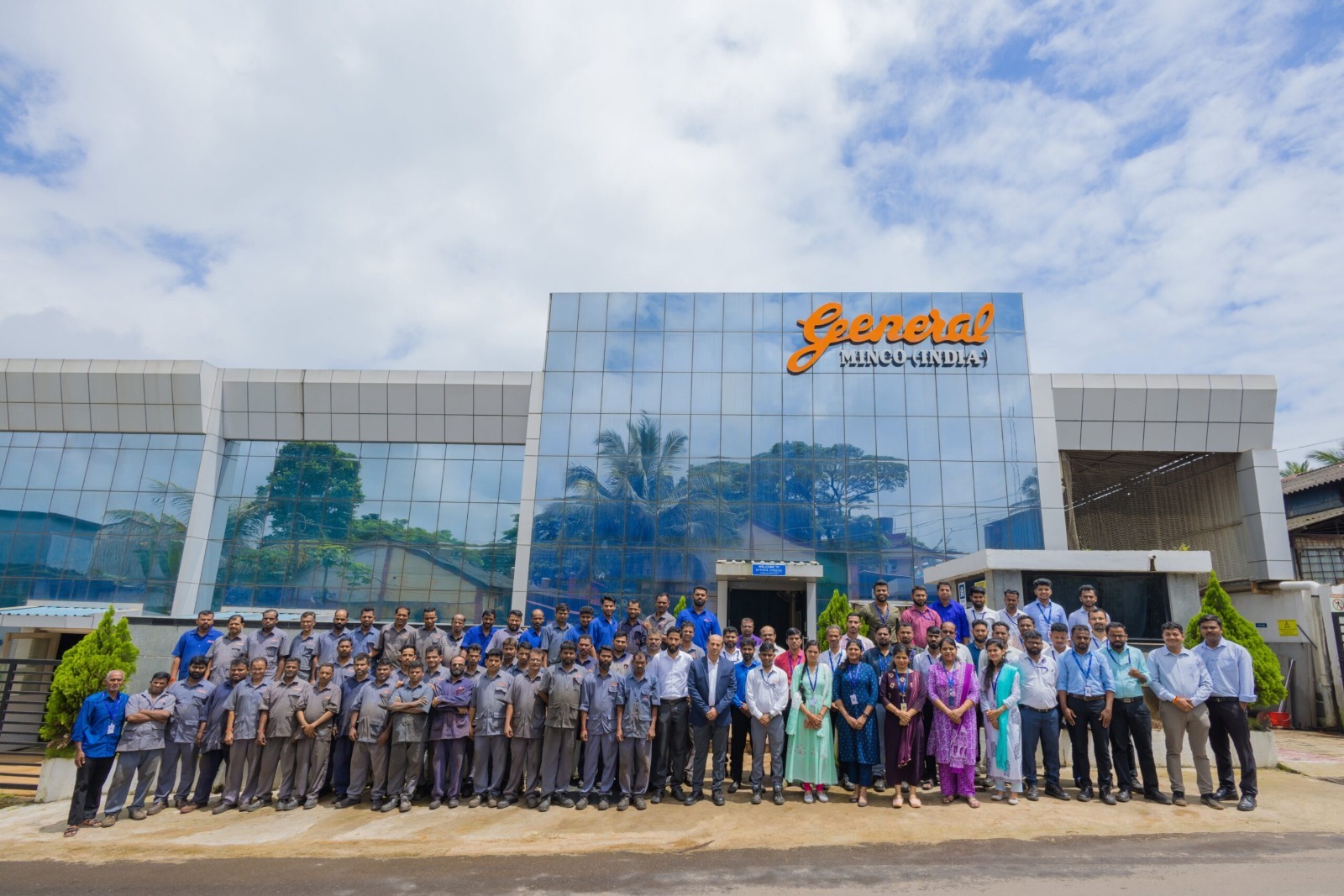
That balance between ambition and discipline has defined GIC's recent growth. Since Kulkarni joined, the company has expanded from 650 to 900 employees and achieved around 40 percent year-on-year growth. Export revenue, once just 16 percent of turnover, now accounts for approximately 52 percent. This shift was deliberate, driven by market expansion into the Middle East, Europe, Russia, and CIS countries, supported by certifications, partnerships, and on-ground presence. Internally, the company implemented ERP and CRM systems, strengthened leadership teams, and established clear SOPs across operations.
People development has been another cornerstone. Long before Kulkarni's tenure, GIC had partnered with nearby engineering colleges for industrial training. Today, that effort has expanded significantly. Students from tier-two and tier-three institutions regularly train at GIC's four Indian plants, gaining hands-on exposure to manufacturing processes. The company has also set up specialised labs at institutions like VJTI, integrated industry electives into curricula, and created direct placement pathways. "We are not just giving back," Kulkarni says candidly. "We are also building a pipeline of industry-ready talent."
Sustainability, once peripheral, is now integral. GIC's new Navi Mumbai plant runs nearly 48 percent on solar energy, with reduced plastic usage, increased metal recycling, and strict environmental compliance. Tree plantation and green-zone certification further reinforce the company's ESG alignment.
As for the future, Kulkarni is clear. India remains the primary growth engine, followed closely by the Middle East, where GIC has already established its first manufacturing plant outside India in Saudi Arabia. Set to begin operations soon, it marks a milestone in Kulkarni's vision of building one of India's first truly multinational instrumentation companies.